Structure/Function Claims Versus Drug Claims: What "Supports" Is Allowed To Mean
A supplement label can legally say a nutrient supports healthy hair. It cannot say it treats hair loss. The line between those two sentences is a specific legal category, and it explains far more about how this panel is worded than most readers realize.
Two families of claim on one label
Two kinds of sentence can appear on a dietary supplement in the United States, and they are governed by entirely different legal standards. One kind describes how a nutrient affects the normal structure or function of the body: it "supports healthy skin," "supports normal hair growth," or "helps maintain healthy nails." The other kind claims to diagnose, treat, cure, mitigate or prevent a specific disease: it "treats alopecia," "cures brittle nail syndrome," or "prevents hair loss caused by a medical condition." The first kind is a structure/function claim, and a supplement can make it without pre-approval from the FDA. The second kind is a drug claim, and making it on a supplement label is illegal without going through the drug approval process.
That distinction is not a stylistic choice by any one brand. It is written into federal law, and it is the reason nearly every supplement in the skin, hair and nails category, this one included, is worded the way it is: careful to describe support for a normal bodily process, and careful never to name a disease it will fix.
What the 1994 law actually created
The category exists because of the Dietary Supplement Health and Education Act of 1994, usually shortened to DSHEA, which set dietary supplements apart from both foods and drugs as their own regulatory class. Before DSHEA, a manufacturer that wanted to say anything about how an ingredient affected the body risked being regulated as an unapproved drug. DSHEA created a middle path: a manufacturer may state that a product affects the structure or function of the body, or describes general well-being from consuming it, without going through drug review, provided the claim meets several specific conditions set by the FDA.
Those conditions are why a structure/function claim looks the way it does on a label. The claim must be truthful and not misleading. It must not state or imply that the product will diagnose, cure, mitigate, treat or prevent a specific disease, because that is what makes something a drug claim under the Federal Food, Drug, and Cosmetic Act rather than a supplement claim under DSHEA. And it must be accompanied by a specific disclaimer, discussed below, every time it appears.
What a structure/function claim must not say
The FDA's own guidance on this category draws the line with examples that are useful to hold in mind while reading any supplement's marketing. "Supports the immune system" is a structure/function claim. "Boosts immunity to fight off infection" edges toward implying a disease-related effect. "Helps maintain healthy hair" is a structure/function claim. "Reverses hair loss" or "treats alopecia" is a drug claim, because alopecia is a recognized medical condition and the second sentence promises to fix it, not merely to support a normal process.
The word doing most of the legal work in these examples is usually a verb: "supports," "maintains," "helps" on one side; "treats," "cures," "prevents a disease," "reverses a diagnosed condition" on the other. A single word can move a sentence from one legal category to the other even when the underlying ingredient and dose are identical. That is worth remembering the next time a supplement label reads like it was drafted with unusual care around its verbs, because in a meaningful number of cases, it was.
The disclaimer every one of them carries
DSHEA also requires that any structure/function claim be paired, on the label, with a specific statement: that the claim has not been evaluated by the Food and Drug Administration, and that the product is not intended to diagnose, treat, cure or prevent any disease. That exact language, in slightly varying phrasing, is required wording, not marketing caution added voluntarily.
It is worth reading that disclaimer on its own terms rather than skimming past it, because it is doing something specific: it is telling you, on the government's own instruction, that no federal agency has reviewed whether the structure/function claim above it is accurate for this particular product. The FDA does not pre-approve supplement claims the way it approves a new drug's labeling. It reviews the framework the claim must fit inside, and it can act after the fact if a claim crosses into disease territory or turns out to be false. It is not, however, verifying in advance that "supports healthy hair" is true for any specific jar on a specific shelf.
What "on file with the FDA" means, and does not mean
A separate part of DSHEA requires that a manufacturer notify the FDA within 30 days of first marketing a product carrying a structure/function claim, stating the text of the claim. Some marketing language leans on this requirement to imply a kind of official standing, phrases such as "notification on file with the FDA," which is technically accurate and also easy to misread.
The notification requirement is procedural. It tells the FDA what claim a company intends to make and when it started making it, so the agency has a record to act against if the claim later proves to be a disease claim in disguise or turns out to be false. It is not a review of the science behind the claim, not an approval, and not an endorsement. A structure/function claim can be on file with the FDA and still turn out, on later scrutiny, to be poorly supported, because the notification step was never designed to test that question in the first place.
A separate standard: the FTC and substantiation
A second federal agency sits behind these same claims, applying a different test. The Federal Trade Commission has jurisdiction over supplement advertising and requires that any objective claim a company makes be backed by competent and reliable scientific evidence before the claim is made, not after. This is the "substantiation" standard, and it is separate from the FDA's disease-versus-structure/function line. A claim can be worded correctly under DSHEA, carefully avoiding any disease language, and still be an FTC problem if the company has no real evidence behind it when it makes the claim.
In practice this means two different questions apply to any "supports healthy X" sentence on a label. The first is whether the sentence, as worded, crosses into disease-claim territory; DSHEA and the FDA's guidance govern that question. The second is whether the company actually has competent evidence for the specific claim it is making; the FTC governs that question, largely independently of how carefully the sentence was worded.
The case study: biotin, hair, and what a review of the evidence found
Biotin is the largest single amount on the Gelagen panel, at 5,000 mcg, and it is also the ingredient most closely associated in supplement marketing generally with claims about hair and nail appearance. That makes it a useful, concrete example of how the structure/function framework interacts with the actual evidence behind a popular claim.
A 2017 systematic review by Patel, Swink and Castelo-Soccio, published in Skin Appendage Disorders, searched the literature for case reports and randomized controlled trials on biotin and hair or nail growth. The review opens by noting plainly that biotin "has gained commercial popularity for its claimed benefits on healthy hair and nail growth" despite "limited research to support the utility of biotin in healthy individuals," and sets out to test that gap directly.
The authors found 18 reported cases of biotin use associated with documented hair or nail changes. In every one of those 18 cases, the patient receiving biotin had an underlying pathology responsible for poor hair or nail growth, such as an inherited or acquired biotin deficiency, brittle nail syndrome, or a condition called uncombable hair syndrome. Every one of those cases showed clinical improvement after biotin supplementation. The review's conclusion is precise and worth quoting closely: biotin supplementation "may be of benefit" in cases of biotin deficiency or specific pathologies, but the authors "propose these cases are uncommon" and state there is "lack of sufficient evidence for supplementation in healthy individuals."
That is a carefully bounded finding, and it maps directly onto the legal distinction this article has been describing. The evidence Patel and colleagues found supports biotin as a treatment for a specific set of diagnosed conditions in people who have them, which is exactly the kind of claim DSHEA reserves for drugs and does not allow a supplement label to make. What the review does not find is evidence that biotin supplementation changes hair or nail outcomes in healthy people who are not deficient and have no underlying pathology, which is the population any supplement marketed for general hair and nail support is actually being sold to.
Reading this label against the framework
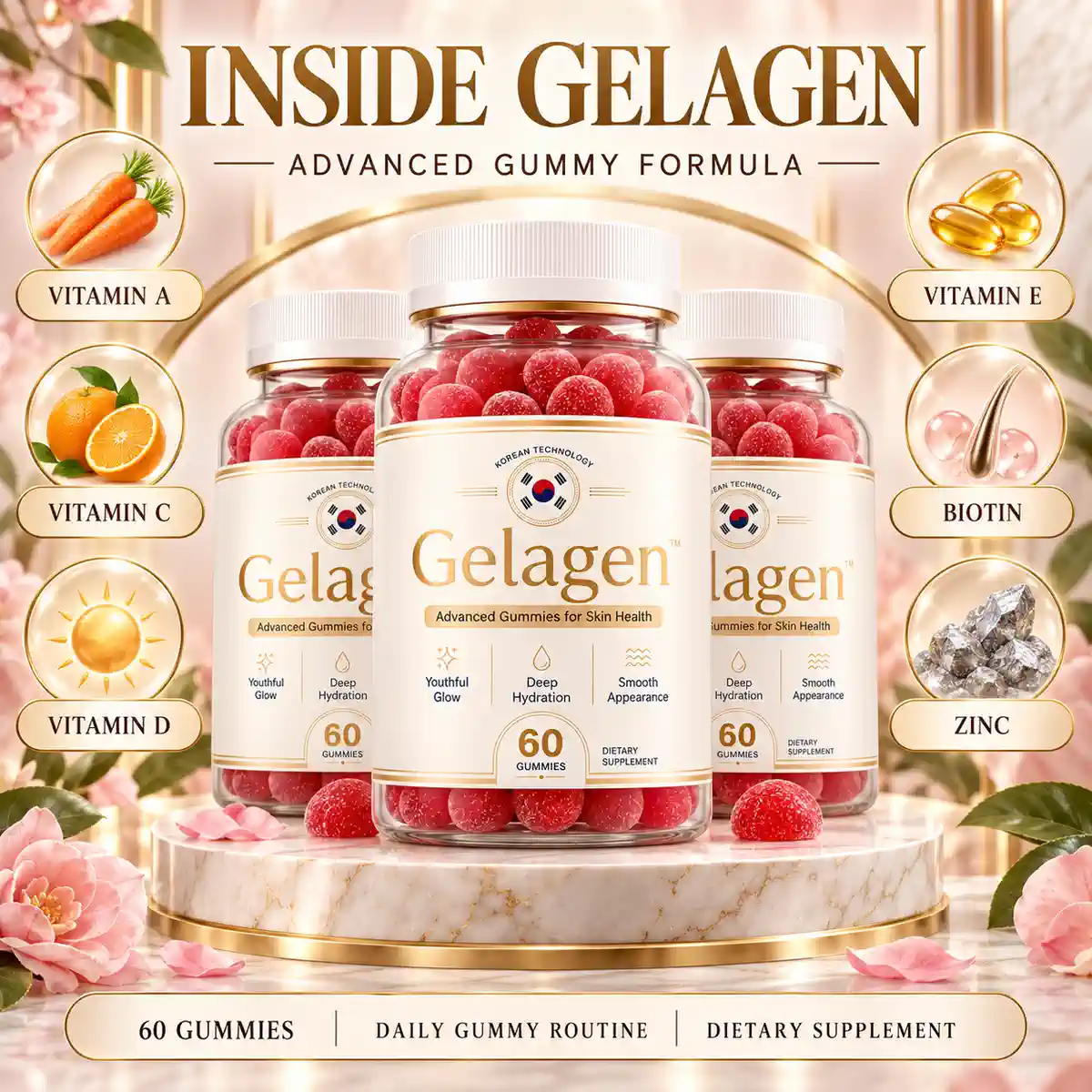
The Gelagen panel lists biotin at 5,000 mcg, a figure the site's own reference page describes as 167 times the Adequate Intake, and this website's own disclaimer language, printed on every page including this one, already states that the product is not intended to diagnose, treat, cure or prevent any disease and that its statements have not been evaluated by the FDA. Read against the Patel review, that disclaimer is not boilerplate caution; it is doing exactly the legal work DSHEA assigns it. A "supports healthy hair" framing for biotin is a structure/function claim precisely because the review above found real, if narrow, evidence that biotin affects hair and nail outcomes in people with an underlying deficiency or pathology, while finding no comparable evidence in healthy individuals. It would not be accurate, and it would cross into drug-claim territory, to say this product treats hair loss or corrects a nail condition; nothing in the review supports that broader claim, and nothing on this panel makes it.
The gap between "supports" and "treats" is not a marketing softener here. It is close to the actual shape of the evidence: real effect where deficiency exists, unresolved question where it does not.
What none of this settles
None of the framework above tells you whether biotin, or any other nutrient on this panel, will do anything noticeable for your own hair, skin or nails. It could not tell you that even if every claim on this label were worded with perfect legal precision, because a structure/function claim, correctly made, is a statement about what category of claim is being made, not a guarantee of an individual outcome. The Patel review's own conclusion, that evidence in healthy individuals is limited rather than absent, is itself an honest description of a genuinely unresolved question, not a hidden admission that nothing works.
It is also worth being clear about what a disease claim would require if a company wanted to make one. Treating a diagnosed condition such as alopecia or brittle nail syndrome with a supplement, rather than supporting a normal process, would place the product in drug territory, requiring the kind of controlled trials and FDA review that no jar of gummies on a retail shelf has undergone. That is precisely why the review above, and every structure/function claim built on it, stays on the "supports" side of the line.
How to read any "supports" claim
The method transfers to any supplement label carrying structure/function language, not only this one.
- Note the verb. "Supports," "maintains" and "helps" describe a structure/function claim. "Treats," "cures," "reverses" or naming a specific diagnosed condition describes a drug claim a supplement is not permitted to make.
- Look for the required disclaimer. Its presence confirms the claim above it is being made under the structure/function category, with all the limits that category carries, not as a reviewed medical claim.
- Remember that FDA notification is procedural, not a scientific review. A claim being on file does not mean it has been tested by the agency.
- Ask what evidence exists for the specific population you are in. The biotin case above shows why this matters: real evidence in people with a diagnosed deficiency does not automatically extend to healthy people without one, and a structure/function claim is legally permitted either way.
The line between "supports" and "treats" is not a loophole. It is the entire structure DSHEA built to let supplements say something true and useful about normal body function without pretending to be medicine, and reading a label with that line in mind turns a marketing sentence into a more precise, more honest piece of information than it first appears to be.
Nothing here is medical advice, and nothing here evaluates whether Gelagen or any specific ingredient will affect your own hair, skin or nails. If you have a diagnosed hair, skin or nail condition, or you suspect a nutrient deficiency, talk to a clinician rather than relying on a supplement's structure/function claim. Gelagen is a dietary supplement for healthy adults aged 18 and over and is not intended to diagnose, treat, cure or prevent any disease.
Related reading on this journal. See also how biotin's own reference figure was set and what a Daily Value is measured against in the first place. The full printed panel is on the supplement facts page.

Gelagen
Every claim on this website is a structure/function claim, worded to describe support for a normal process, not to treat a diagnosed condition.
Order GelagenSources for this article
- Patel DP, Swink SM, Castelo-Soccio L. A Review of the Use of Biotin for Hair Loss. Skin Appendage Disord. 2017;3(3):166-169. PMID 28879195.
- U.S. Food and Drug Administration. Structure/Function Claims. https://www.fda.gov/food/nutrition-food-labeling-and-critical-foods/structurefunction-claims
- U.S. Food and Drug Administration. Dietary Supplement Health and Education Act of 1994 (DSHEA), Public Law 103-417. https://www.fda.gov/food/dietary-supplements
- Federal Trade Commission. Dietary Supplements: An Advertising Guide for Industry. https://www.ftc.gov/business-guidance/resources/dietary-supplements-advertising-guide-industry
Sourced from the product label and PubMed-indexed research. The ingredient amount above is read from the Gelagen supplement facts page. The clinical evidence discussed is listed with its PubMed number, and the regulatory framework is sourced directly to the FDA and FTC. No claim here goes beyond what those records state.