Gelagen Official Website Blog Is 20 Milligrams Of Vitamin C Enough To Matter For Collagen
Is 20 Milligrams Of Vitamin C Enough To Matter For Collagen
Vitamin C is a genuine, well-documented requirement for collagen production. The question this piece asks is narrower and purely arithmetic: does the panel's printed 20 mg dose clear the bar that requirement actually sets, or fall short of it.
The row, and the question this piece is asking
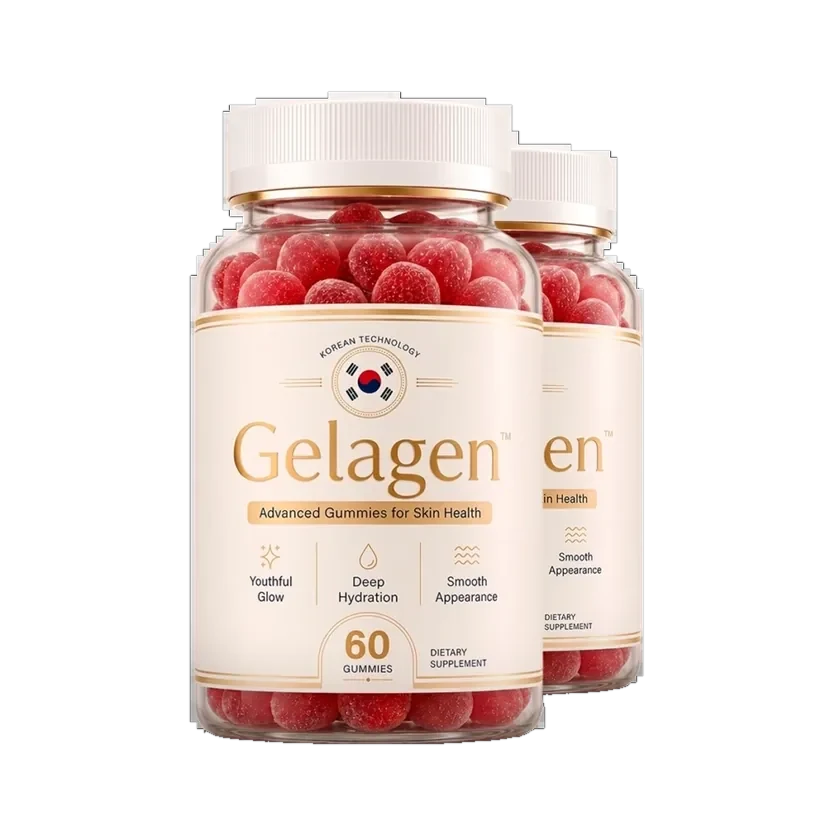
Gelagen’s supplement facts panel lists vitamin C, as ascorbic acid, at 20 mg per two-gummy serving, about 22% of the Daily Value. The same row states the adult RDA directly: 90 mg for men, 75 mg for women. The panel also states, in its own description column, that vitamin C is required for collagen biosynthesis, which it calls the one true mechanism sentence on the panel. That sentence is accurate; it is also the entire reason this piece exists, because a true mechanism claim printed next to a small number invites an honest arithmetic question that the panel itself does not answer: is 20 mg enough of a contribution toward that mechanism to be worth noting, or is it small enough to be closer to a token amount.
This is a narrower question than it might first sound. It is not a question about whether Gelagen, as a gummy, is a “collagen supplement” in the sense of containing collagen peptides; Gelagen's own panel carries no collagen protein row at all, a separate fact from the vitamin C arithmetic this piece is about. It is also not a question about the specific delivery form of vitamin C, which is a separate, forms-and-bioavailability question this piece does not take up. What this piece asks, and only this, is arithmetic: given that vitamin C is genuinely required for collagen synthesis, does 20 mg move a person meaningfully toward meeting that requirement, or not.
Why vitamin C is required for collagen at all
The mechanism itself is well established and is described in the NIH Office of Dietary Supplements’ health professional fact sheet on vitamin C. Collagen is the body’s most abundant structural protein, and building it requires two specific enzymes, prolyl hydroxylase and lysyl hydroxylase, which stabilize the collagen molecule’s triple-helix structure by hydroxylating proline and lysine residues within it. Both of those enzymes require vitamin C as a cofactor to function. Without adequate vitamin C, these hydroxylation reactions do not proceed normally, and the collagen that does get produced is structurally unstable. This is the same biochemical fact behind scurvy, the disease long associated with vitamin C deficiency: the connective tissue symptoms of scurvy, including poor wound healing, bleeding gums and fragile blood vessels, trace directly back to collagen that cannot be properly stabilized without this cofactor. Vitamin C’s role in collagen synthesis is, in other words, not a marketing simplification; it is one of the better-characterized cofactor relationships in human nutrition, which is exactly why Gelagen’s own panel is accurate to describe it as the one true mechanism sentence on the label.
20 against 75 to 90: the arithmetic, done plainly
Twenty milligrams against a 75 mg RDA is 26.7%. Twenty milligrams against a 90 mg RDA is 22.2%. That is the entire calculation behind the panel’s own printed 22% Daily Value figure, and it is worth stating in full because it is the only arithmetic this piece is making: roughly a fifth to a quarter of the adult RDA, from this one source, in this one serving. There is no hidden multiplier and no alternate reading of the number; a two-gummy serving supplies about a fifth to a quarter of the day’s reference requirement for vitamin C and nothing more than that.
| Comparison | Result |
|---|---|
| 20 mg against the 75 mg RDA (women) | 26.7% of the daily requirement |
| 20 mg against the 90 mg RDA (men) | 22.2% of the daily requirement |
| Remaining requirement after this serving (women) | 55 mg still needed from elsewhere that day |
| Remaining requirement after this serving (men) | 70 mg still needed from elsewhere that day |
Put in those terms, the honest answer to whether 20 mg is a large or small contribution is that it is a partial one, closer to a quarter of the requirement than to a half of it, and closer to a token amount than to a dose that could plausibly be described as covering the day’s vitamin C requirement on its own. That is simply what the percentage printed on Gelagen’s own panel already says, read without rounding it up or down in either direction.

Is there a threshold, or is more always better
The arithmetic above only tells part of the story, because the relationship between vitamin C intake and the enzymes it supports is not perfectly linear at every level of intake. The ODS fact sheet describes vitamin C absorption and tissue saturation as following a dose-dependent curve: at low to moderate intakes, absorption efficiency is high, and at intakes well above the RDA, absorption efficiency declines and any additional vitamin C beyond what the body’s tissues can use is excreted rather than retained. That means two things worth holding at once. First, the collagen-synthesis enzymes described above do not require enormous amounts of vitamin C to function at all; the cofactor relationship operates at levels well within ordinary dietary range, which is a large part of why deficiency-level collagen dysfunction, meaning scurvy, is now rare wherever dietary vitamin C is broadly available, rather than something that requires megadosing to avoid. Second, the RDA itself, 75 to 90 mg for adults, is already set with a margin intended to maintain near-maximal tissue saturation and cover the needs of nearly all healthy individuals, not set at the bare minimum required to avoid overt deficiency symptoms; the fact sheet is explicit that the RDA was set higher than the minimum needed to prevent scurvy specifically because of vitamin C’s broader antioxidant and cofactor roles throughout the body.
Twenty milligrams sits below that RDA margin, but it does not sit at zero, and it is not being added to a diet assumed to contain no other vitamin C at all. The honest, narrow answer to whether the dose is “enough to matter” therefore depends on what the rest of a person’s day already contains, which the next section addresses directly, rather than on whether 20 mg alone clears the full RDA, which it plainly does not.
What the other 73 to 78% has to come from
Because 20 mg covers only a fifth to a quarter of the adult RDA, the remaining 55 to 70 mg has to come from somewhere else in a person’s day for the full RDA to be met at all. Vitamin C is, in practical terms, one of the easier nutrients on this panel to obtain from ordinary food; the ODS fact sheet lists citrus fruits, peppers, strawberries, broccoli, and white potatoes among common, substantial dietary sources, several of which supply the majority of an adult’s daily requirement in a single ordinary serving. For a reader whose diet already includes regular fruit or vegetable intake, the 20 mg on this panel is genuinely additive to a total that likely already clears the RDA without it. For a reader whose diet is lower in fresh produce, the 20 mg on this panel is a meaningful but clearly partial contribution, and reaching the full RDA still depends on food sources or another supplement to close the remaining gap.
This is the same structural point an earlier piece on this journal, a Daily Value is a label rule, not a target, makes about the panel more broadly: a percentage printed on one product’s label describes that product’s contribution in isolation, not a reader’s total daily intake from every source combined. Twenty milligrams is a real, correctly labeled, partial contribution toward a real biochemical requirement. It is not, on its own, a claim that this serving supplies the full daily need for the nutrient that supports the collagen-synthesis mechanism the panel names.
Why the RDA itself differs by 15 mg between men and women
One detail worth explaining rather than skating past is why the reference figure this piece compares 20 mg against is not a single number but a range, 75 mg for women and 90 mg for men. The ODS fact sheet attributes that gap primarily to differences in average body size and lean body mass between the sexes, factors the Food and Nutrition Board accounts for across several nutrient RDAs, vitamin C included, rather than to any difference in how the collagen-synthesis mechanism itself operates between men and women. The underlying biochemistry, vitamin C as a required cofactor for prolyl and lysyl hydroxylase, is the same regardless of sex; what differs is the reference quantity considered adequate to saturate a larger or smaller average body. This is also why the fact sheet lists a higher RDA again for pregnancy and lactation, 85 mg and 120 mg respectively, reflecting the additional physiological demand those states place on the nutrient, a detail this article notes for completeness rather than as guidance, since Gelagen itself is not intended for pregnant or nursing use regardless of this arithmetic.
Against either reference point, 75 mg or 90 mg, the 20 mg printed on Gelagen’s panel lands in the same rough quarter-to-fifth range calculated above; the gender difference in the RDA changes the precise percentage by about four and a half points, from 22.2% to 26.7%, but it does not change the basic shape of the answer. Twenty milligrams is a partial contribution under either reference figure, not a full one under one and a token one under the other.
Collagen is one role among several, not the only one
It is also worth placing the collagen mechanism in context, because vitamin C's function in the body is broader than the one sentence on Gelagen's panel highlights. The ODS fact sheet describes vitamin C as a genuine, water-soluble antioxidant that helps protect cells from oxidative damage caused by reactive molecules generated through normal metabolism and through exposure to things like tobacco smoke and air pollutants, and as a cofactor for several other enzyme families beyond the two involved in collagen synthesis, including enzymes involved in carnitine and norepinephrine synthesis. The fact sheet also documents that vitamin C meaningfully enhances the absorption of non-heme iron, the form of iron found in plant foods, when the two are consumed together. None of these additional roles change the collagen arithmetic this piece has worked through, but they are a reminder that a single mechanism sentence on a Supplement Facts panel, however accurate, is necessarily a summary rather than the complete account of what a nutrient does, and this piece has deliberately isolated the collagen question rather than folding every other role of vitamin C into the same calculation.
What this piece is not arguing
It is worth being explicit about the boundaries of this piece, because a purely arithmetic question is easy to overstate in either direction. This piece is not arguing that 20 mg of vitamin C is useless; the enzyme cofactor relationship described above operates at ordinary dietary levels, and a real, if partial, contribution toward that level is not the same thing as no contribution at all. It is also not arguing that 20 mg is sufficient on its own to guarantee optimal collagen synthesis for any individual reader; that would require knowing a specific person’s total diet, which this article cannot see. And it is not making a claim about the product’s delivery form, bioavailability, or the gummy format specifically; this piece has stuck to one question, the size of the printed dose against the size of the daily requirement, and left every other question about this ingredient to the pieces on this journal and elsewhere built to answer them.
A direct answer
Read plainly, 20 mg of vitamin C is a real but partial contribution: about a fifth to a quarter of the adult RDA, delivered through a well-documented cofactor pathway that genuinely requires vitamin C to stabilize collagen’s structure, but well short of covering that requirement on its own. Whether that partial contribution is, in an individual reader’s case, “enough to matter” depends on what the rest of that reader’s day supplies from food or elsewhere, a variable this panel, and this article, cannot see or calculate on anyone’s behalf. What can be stated plainly is the arithmetic itself, printed accurately on Gelagen’s own label and repeated here without rounding it toward either a more impressive or a more dismissive answer than the numbers actually support.
Nothing on this page is medical advice. This article is a dosing-arithmetic explainer about one printed row on Gelagen's supplement facts panel, not an assessment of any individual's vitamin C intake or collagen health. Gelagen is a dietary supplement for healthy adults aged 18 and over, it is not for anyone who is pregnant or nursing, and it is not intended to diagnose, treat, cure or prevent any disease.
Sources for this article
- NIH Office of Dietary Supplements. Vitamin C: Fact Sheet for Health Professionals. https://ods.od.nih.gov/factsheets/VitaminC-HealthProfessional/
- NIH Office of Dietary Supplements. Vitamin C: Fact Sheet for Consumers. https://ods.od.nih.gov/factsheets/VitaminC-Consumer/
- Electronic Code of Federal Regulations. 21 CFR 101.36 - Nutrition labeling of dietary supplements. https://www.ecfr.gov/current/title-21/chapter-I/subchapter-B/part-101/subpart-C/section-101.36
Further reading. More from the Gelagen journal, and the full supplement facts panel this piece draws its printed amount from.
More about Gelagen
Order Gelagen on the official website
Thirteen printed amounts on one panel, two gummies a day, and sixty days from the date of purchase to decide.
$49 to $79 a bottle · 60 days from the date of purchase
Order Gelagen On The Official WebsiteFree US shipping on three and six jars · 60-day money-back guarantee · lot GEL-26/GO-1585